
What is VRV?
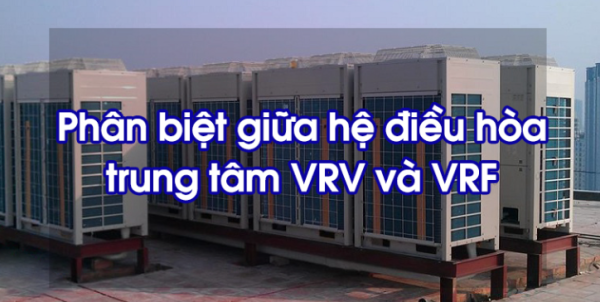
VRV (Variable Refrigerant Volume) is the world’s most popular central air conditioning system, developed by Japanese giant Daikin. Put simply, a VRV air conditioning system is one in which a single outdoor unit can serve many indoor units, with the refrigerant gas acting as both the working fluid and the cooling medium.

VRV air conditioning is a proprietary brand of the Daikin group
What is VRF? How does VRV differ from VRF?
Alongside VRV air conditioning, you will often hear the term central air conditioning VRF. So what is VRF, and how does VRV differ from VRF? Here is the answer:
What is VRF?
VRF (Variable Refrigerant Flow) is also a term for central air conditioning systems, used by manufacturers such as LG, Midea, Toshiba, Mitsubishi, etc. to distinguish them from Daikin air conditioning.

How does VRV differ from VRF?

In the simplest terms, VRF central air conditioning is essentially the same as VRV central air conditioning. However, because Daikin invented the first VRV central air conditioning system, it registered the term VRV as its official, exclusive trademark. Other brands therefore use the name VRF for their central air conditioning systems.
What are the advantages and disadvantages of central air conditioning?
Every type of air conditioner has its strengths and limitations, to a greater or lesser degree depending on the product line, and VRV and VRF systems are no exception. The advantages and disadvantages of central air conditioning are as follows:
Advantages of central air conditioning
- Central air conditioning is highly aesthetic. The equipment is designed to be installed in “concealed” locations, and the wide variety of indoor units keeps the whole space looking clean and attractive.
- VRV and VRF systems consume less electricity and reduce operating costs. They run steadily and are less affected by outdoor temperatures thanks to water-cooled heat rejection. They are also highly durable, with a long service life.
- A central system can combine cooling and heating within the same central air conditioning system principle, using heat pump or heat recovery operation for very high efficiency.
- A defining feature of central air conditioning is that one outdoor unit can serve many indoor units across a wide capacity range, so you can choose the capacity that best suits the needs of your building.
Disadvantages of VRV and VRF systems
- The biggest limitation of VRF and VRV central air conditioning is that it is only suitable for large spaces and areas where many people gather, such as hotels, offices, villas, etc.
It is therefore best to weigh up the advantages and disadvantages of central air conditioning carefully in order to choose the most suitable solution.
For consultation on the design and installation of a VRV/VRF CENTRAL AIR CONDITIONING system, please contact TechConnect Vietnam for the best advice and support.
TechConnect Vietnam Engineering and Trading Co., Ltd.
- Address: FLC Garden City Urban Area, Dai Mo Ward, Nam Tu Liem District, Hanoi
- Hotlines: 0988 883 961/ 0987 989 822
- Email: techconnect.mepf@gmail.com
- Website: https://techconnectmepf.com/en/