
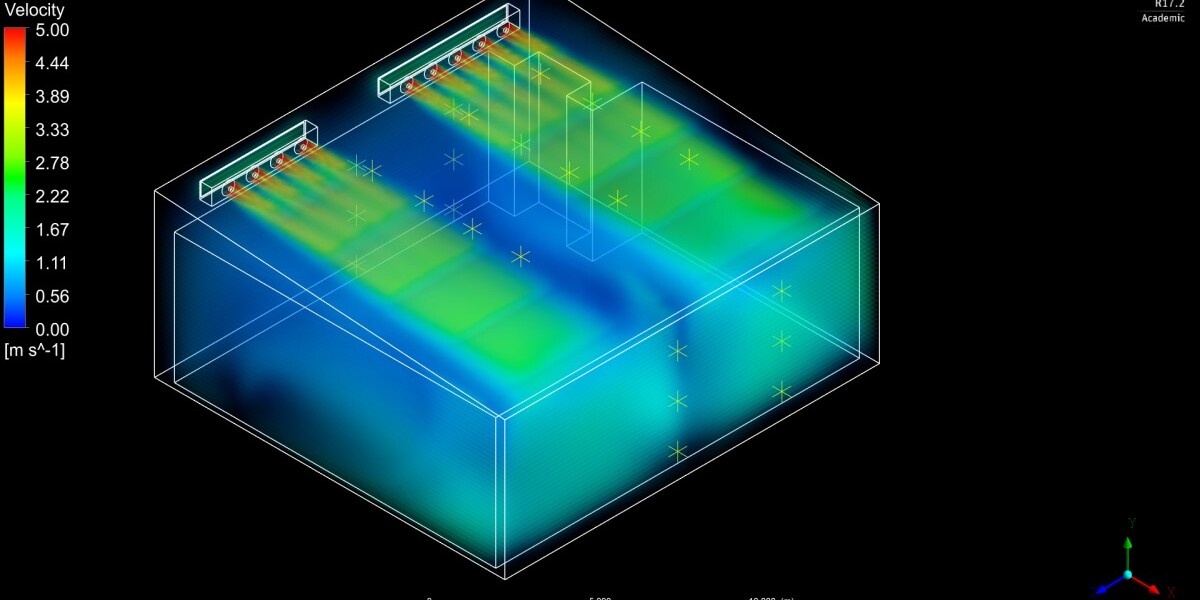
In today’s technology-driven world, advances in flow simulation (CFD – Computational Fluid Dynamics) have opened up a new approach to air conditioning system design. Modern air conditioning is no longer just about creating a comfortable environment and good air quality in living and working spaces; it is also key to optimising performance, saving energy and minimising environmental impact.
In the past, air conditioning systems were usually designed on the basis of experience and simple assumptions. Applying CFD has brought a significant breakthrough to this process, and using CFD in air conditioning design offers many benefits.
First, it saves time and resources compared with traditional methods, allowing engineers and designers to explore and refine a design before it is actually built.
HVAC design calculations conventionally assume “ideal flow” (air that is perfectly mixed in an infinitesimally short time) and may rely on handbooks and rule-of-thumb formulas to keep calculations quick and simple. This approach can lead to poorly sized HVAC equipment, which increases operating costs and reduces energy efficiency.
A tool is therefore still needed to verify the design before construction. To do so, engineers can either build physical test models or run CFD simulations under real operating conditions.
Example:
When a patient with an acute respiratory infection needs to be hospitalised, they are placed in a controlled facility known as an isolation room. Unlike other isolation rooms, an airborne infection isolation room (AIIR) is also called a negative pressure room. This is where computational fluid dynamics (CFD) tools play an essential role.
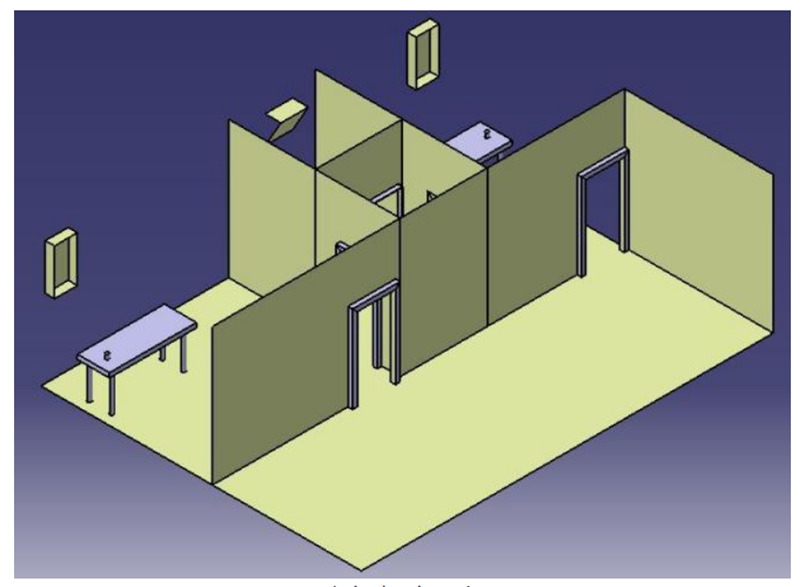
LAYOUT OF NEGATIVE PRESSURE ROOMS IN A HOSPITAL
Experimentally assessing room pressures and airflow patterns can be difficult in the early stages of hospital layout design. CFD allows HVAC engineers to study airflow patterns virtually and use the results to inform further design optimisation in compliance with ASHRAE Standard-170 (Ventilation of Health Care Facilities).
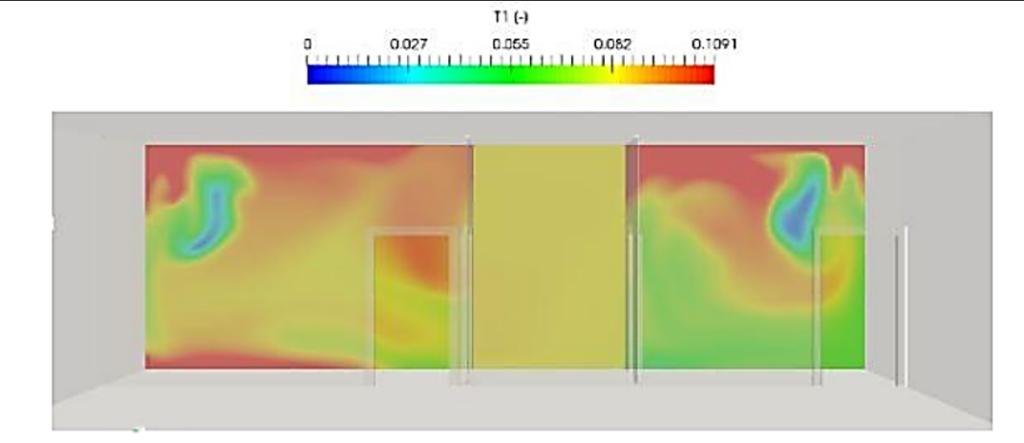
SIMULATION RESULTS BEFORE IMPROVEMENT
This air acts as a vehicle carrying contaminated air from the room into the corridor. The contaminant concentration is still above 10% two metres from the patient. This makes the design unsafe for medical staff and patients in other areas, so it needs to be improved by installing a supply fan in the corridor and sealing the windows in the building.
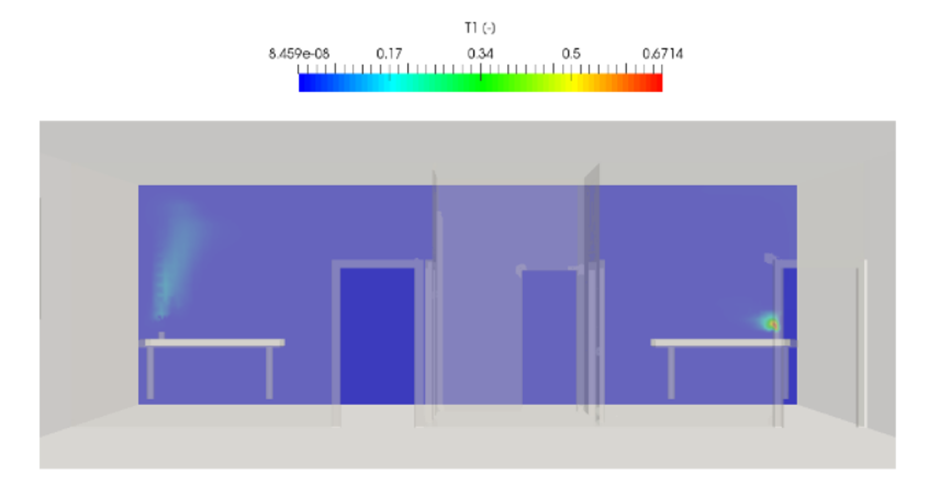
SIMULATION RESULTS AFTER IMPROVEMENT
As the new results above show, the improvements made through simulation reduced the contaminant concentration to almost zero, keeping the medical staff caring for the patient safe.
Second, it improves performance and saves energy, ensuring that the air conditioning system runs efficiently with maximum energy savings.
One of the most important applications of CFD is analysing airflow and temperature distribution within a space. By accurately simulating how air moves through the system, CFD identifies areas at risk of becoming too hot, too cold or poorly ventilated.
Engineers can then adjust the configuration and position of system components to achieve an even and efficient temperature distribution.
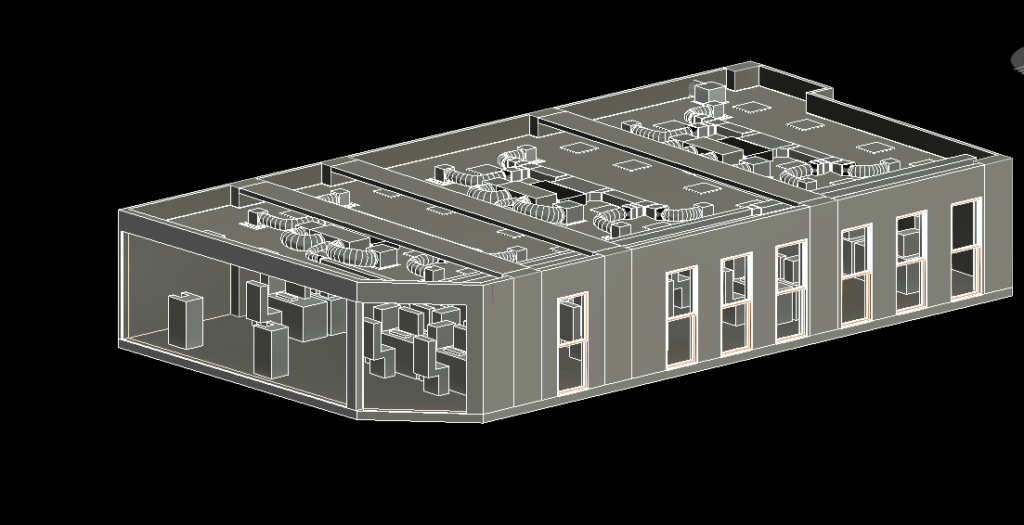
MODEL OF AN OFFICE
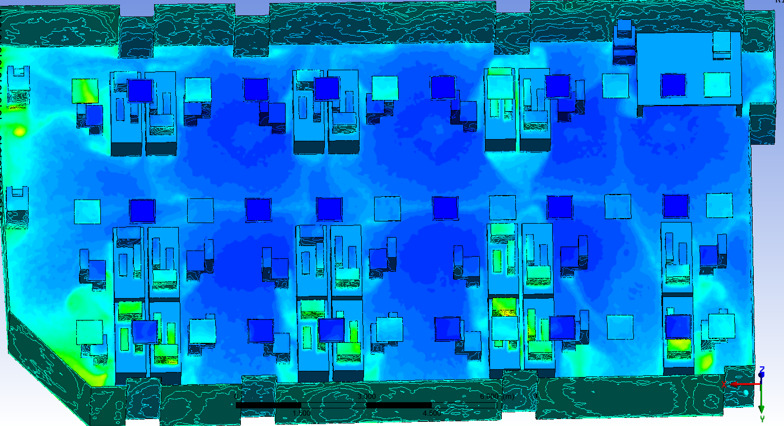
SIMULATED TEMPERATURE FIELD OF AN OFFICE
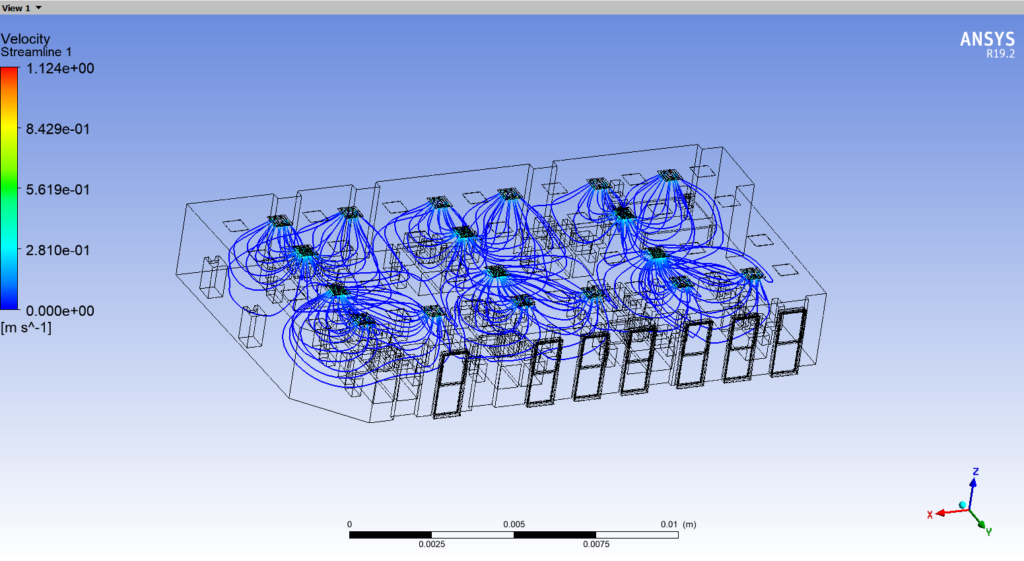
SIMULATED AIR VELOCITY FIELD OF AN OFFICE
Above all, applying CFD to air conditioning system design has delivered outstanding benefits. It not only optimises performance and saves energy, but also ensures good air quality and better living and working environments.
As technology continues to advance, we hope that CFD will keep helping to create more comfortable, efficient and sustainable living and working environments in the future.
If you need consulting on the design and installation of an air conditioning system, please contact TechConnect Vietnam for expert advice and support.
Techconnect Vietnam Engineering and Trading Co., Ltd.
- Address: FLC Garden City Urban Area, Dai Mo Ward, Nam Tu Liem District, Hanoi
- Hotlines: 0988 883 961/ 0987 989 822
- Email: techconnect.mepf@gmail.com
- Website: https://techconnectmepf.com/en/